Hi friends :)
W had been making lots of progress on reading and we have been working on CVC words since November of last year. I thought I’d share some of the fun ways we are learning them. She is eager to read for herself but we like to keep things relaxed and fun since she is only 4.5 years. It’s been going beautifully steady so far – no pressure, just small progressive steps and practice.
(Amazon affiliate links below)
Before you start with CVC words, you’ll want your child to master their letter sounds. Here are my top resources and tips.
Leap Frog’s Letter Factory. If I am being 100% honest here, this is the number one way that my daughter learned her sounds. No shame. I found it on HBO and all it took was 1-2 watches until she was singing along and then singing it randomly throughout the day. Sometimes I would just start to sing the song myself (because it obviously will get stuck in your head) and she would fill in the blank for the sound. She loved that. I am not exaggerating when I say that this is the #1 thing that has made the letter sounds stick. The rest of the resources I am including below simply reinforced what she already knew through this program. If there is one thing on this list to do, it is this.
ABC See Hear Do. We love this short and sweet letter sounds book because it is perfectly for active, wiggly ones. You learn the sounds along with movement/gestures which is particularly great for kinesthetic learners. It is affordable and I highly recommend it. At the time that we used it, it was included on Kindle Unlimited (so check that out if you have it).
Sand or shaving cream letters. In conjunction with handwriting practice, this was one way we reinforced sounds. I would ask her to use her finger to write the letter in shaving cream or sand and I would have her repeat the letter sound.
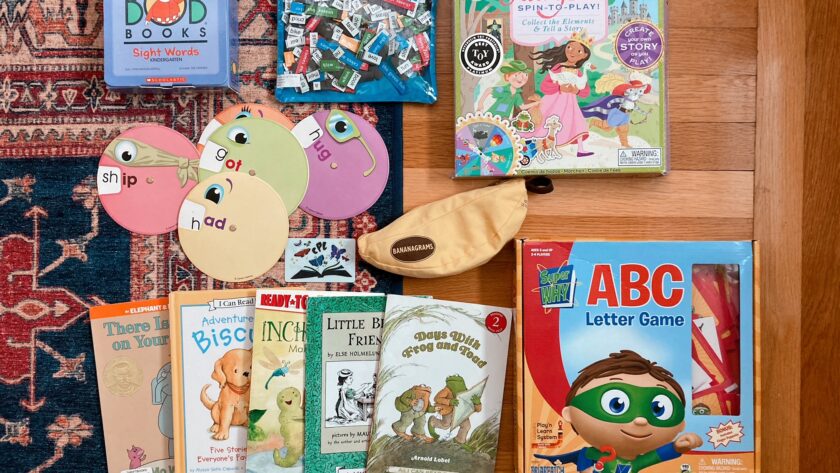
Super Why show and game. I have found this PBS show to be the best for letter sounds/pre-reading. Both of my girls are engaged when it is on. We love it so much, we bought the game for W’s birthday and she loves playing. It teaches everything from letter recognition, letter sounds, rhyming, and reading.
Explode the Code. Once she had a pretty good handle on sounds, we picked up the Get Ready for the Code workbooks. She liked them but they got a bit repetitive. We ended up abandoning in the B book because she pretty much mastered at that point. We may go back to using it eventually as a supplement if needed. If your child likes workbooks, this is an inexpensive and effective choice.
Reading Eggs. If you have it in your budget, I recommend Reading Eggs (aside from reading, the math game Math Seeds is also great). This app is $10/month but has been well worth the investment because it has reinforced sounds and has moved into pre-reading concepts. A free alternative to this is Teach Your Monster to Read. It gets the job done, but wasn’t as fun because there isn’t as much variety. W would get bored with it pretty quickly.
Random repetition. At the end of the day, it really came down to this. Whatever we were working on, we would repeat repeat repeat. Singing songs in the car, reading together and pointing out words, etc. We talked about letters and their sounds very casually at least once a day.
If your child knows their letter sounds and is ready to start sounding out CVC words, then I hope these fun ideas help.
Word family wheels – I found these for $6 and cannot believe how much my daughter took to them. She LOVES spinning them and has learned most CVC words through playing with them. She’ll grab one and ask me to sit on couch with her so she can read to me. It’s so so cool. Proud mom.
BOB books – We have the beginner set and these were the first books she officially read herself (Mat and Sam). She was SO proud (as she should be) and it has boosted her confidence.
Boggle Jr. – Boggle is one of my favorites so we invested in the Junior version and it’s a fun and tactile way to explore spelling and reading.
Loose Letters and Play-Doh – I will set up a CVC word with loose letters and place a ball of Play-doh under each letter. I ask her to make the letter sound and press the Play-Doh “button” as she makes each sound. I did this a lot in the beginning when she was learning to sound things out separately before blending. She loved it.
Bananagrams – We do not play in the traditional sense but it is fine to mess around with the tiles. We use them when working on word families and rhyming because it is easy to move tiles around/replace/swap/etc.
3-Part Word Puzzles – Both of my girls love puzzles so these were a no-brainer to have.
Read, Build, Write sheet – I printed and laminated a read-build-write sheet from Silo and Sage. I have a set of CVC word flash cards and will pull one out randomly (or let her choose). She will build with our loose letters and then write it with a dry-erase marker. Spelling, reading, AND handwriting all in one. We never do more than 1-3 a day at this point.
Once your child is in the early reading stage, we have loved the following resources.
Library card. I know I know, but I have to include it because the library is our most used resource. We take home stacks and stacks of books every week! From picture books that I read aloud (she loves to follow my finger and will interject if she wants to read) and early readers. Speaking of…
Early readers. Invest in early readers aside from taking out from the library so that your child can practice on the same books frequently. Biscuit, Frog and Toad, and Little Bear are of our favorites!
Fairytale Story Game/Cards. This is one of my girls’ favorites. They really love making up their own stories (and sometimes I jot them down, which I will discuss further down). While this isn’t “reading” practice per se, it is a way to excite them to tell/read stories and exercise their imagination, enhance their vocabulary, etc.
Explode the Code. We use these workbooks every once in a while for practice, but my daughter isn’t crazy about them. If we need to reinforce a concept, sometimes I will pull this out and gauge her interest. They are affordable, simple, and straightforward phonics practice.
Jot It Down. Jot It Down is a Brave Writer program by Julie Bogart and we have been utilizing the Fairytale project (when you have your child re-tell a fairytale and scribe it for them to illustrate). Sure, it is considered a writing program, but I believe it directly helps my reader because it truly excites her when I type her words out and read them back to her. We have done classic fairytales and also stories she makes up herself. This exercise is relaxed and fun, while showing her that written words matter. What better way to encourage them to read?